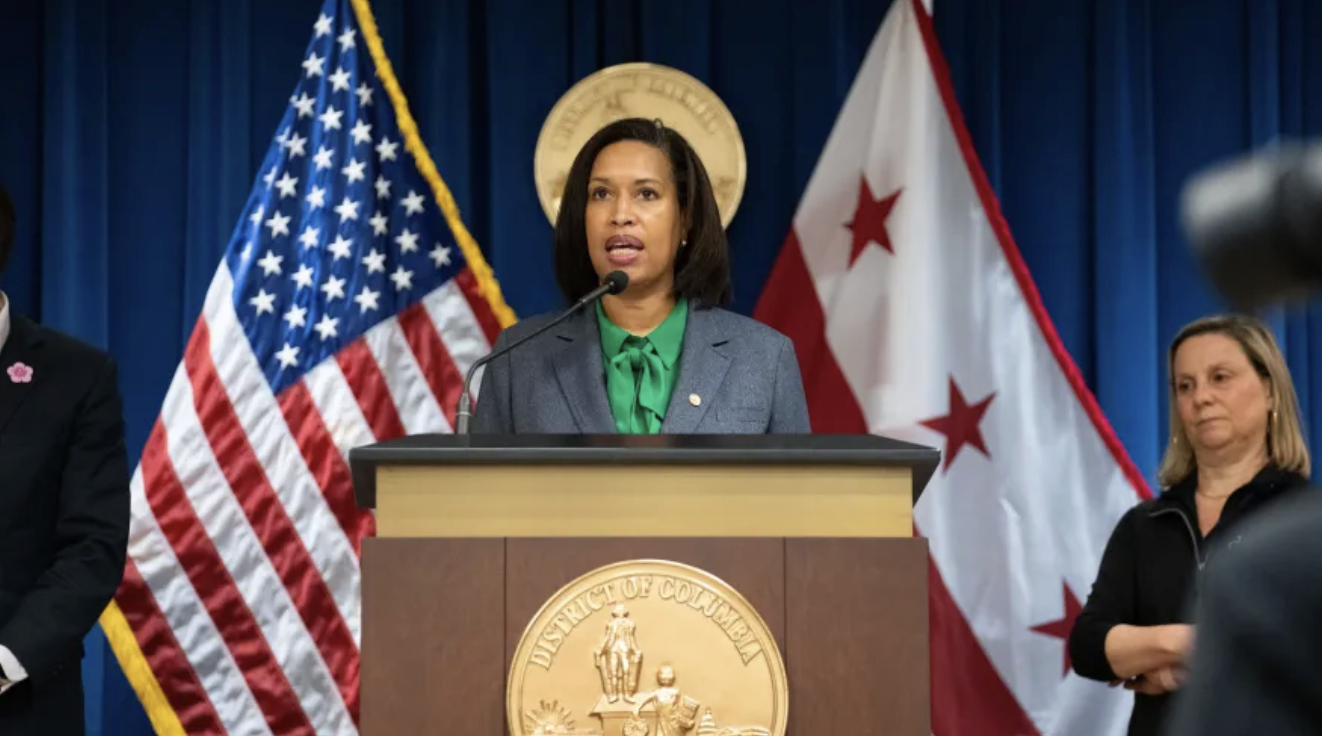
Over the past twelve years, Washington, D.C. has undergone a tumultuous and uncertain time filled with a pandemic, a crime surge, an insurrection, immigration raids, and three presidential administrations. But one constant is our mayor: Muriel Bowser.
With her term in office coming to a close, there remains one eminent question for Mayor Bowser: How will history remember her?
Muriel Bowser will be remembered more than anything else as a mayor who lacked the vision and courage required to bring D.C. to the forefront of American cities while successfully guiding D.C. through turbulent times.
Take 2014, for example, when D.C. was a city at a crossroads— economically doing well, and riding the wave of post-Great Recession growth, but facing a political stalemate after a string of one-term mayors. Incumbent mayor Vincent Gray had faced a series of scandals involving campaign finance fraud and the hiring of unqualified staff. Then, Councilwoman Muriel Bowser challenged Mayor Gray and decisively defeated him, promising to sweep corruption out of City Hall.
Much like many of Bowser’s other promises of change, her vow to fight corruption became lost in the maelstrom of governing. Instead of creating a bridge for D.C. to the future, Bowser has spent most of her term dealing with ongoing issues.
An excellent example of Bowser focusing on the status quo, rather than new ideas, was the dramatic surge in carjackings from 2022 to 2024. Bowser initially bungled the response by delivering a press conference where she seemed to blame the victim of a carjacking for the crime. She was eventually able to address the problem with increased policing and new programs, effectively tackling an issue that had begun under her term, while neglecting long-term concerns like education.
Education, of course, has drastically improved in D.C. over the last thirty years. This can be mostly attributed to the implementation of the charter school program in 1995, which has lifted the District from being ranked last for education among major cities to being ahead of New York and Los Angeles. Bowser deserves some credit for this success. However, she has not taken nearly enough action to deal with racial discrepancies that remain in D.C. Public Schools (DCPS), where 81% of White eighth graders are proficient in math compared to only 12% of their African American counterparts. This difference is almost triple the national average and is a detrimental issue for future mayors to address.
Throughout Muriel Bowser’s 12 years in office, she has handled the crises placed before her as well as any mayor can be expected to. However, she has lacked the vision required to push D.C. towards a better future. As she prepares to leave the mayoral office, D.C. remains very similar to what it was when she began her term in 2015: a city with deep-seated problems — but also with the hope that together, they can be overcome.