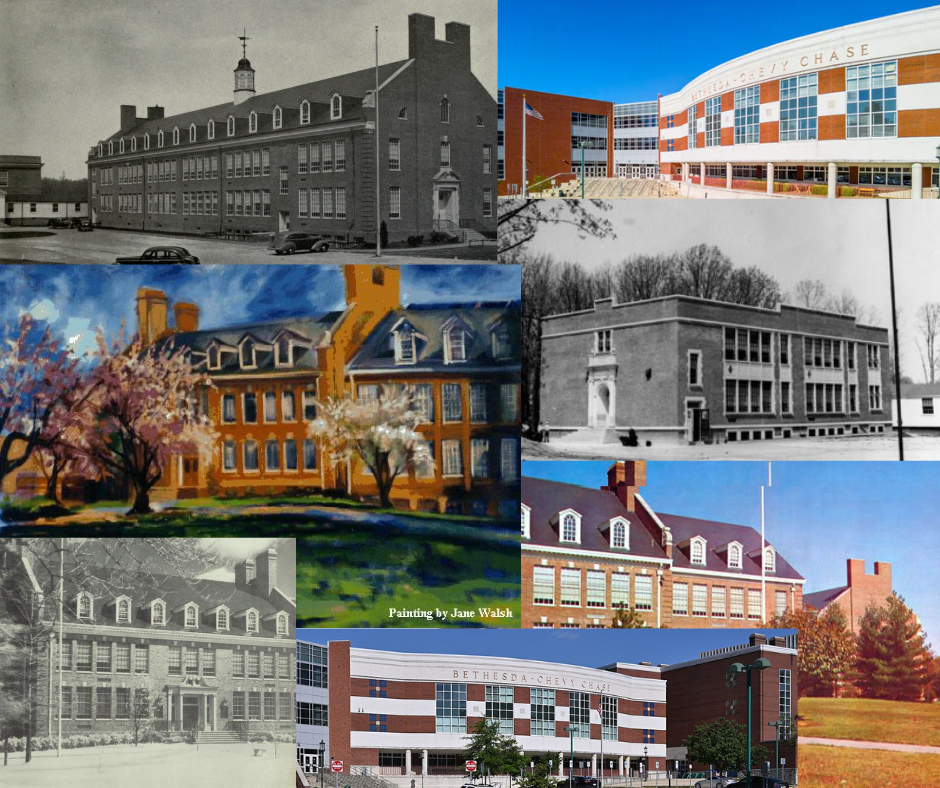
When you walk into the Headquarters of the Tattler Newsroom today, the air is thick with the modern sounds of BCC: the frantic click of laptop keys, the shared ‘evergreen’ pitches, and the inevitable hunt for a snack in the back drawer. But if you don’t listen closely, it just might slip away – the quiet hum of a century-old legacy vibrating beneath our feet.
It is a frequency existing in the spaces between then and now – a rhythmic, generational inheritance that turns a four-year stay into a lifelong orbit. Long before the glow of modern monitors, that same hum echoed through the manual clatter of 1950s typewriters and the ink-stained hustle of a newsroom, living on marked-up drafts and midnight deadlines. It is a cycle of ink and influence that persists as a recurring headline, a pulse, a heartbeat that is passed down across decades of shifting hallways and changing faces, where the burgundy-red of the brick eventually fades, but the architecture of the spirit remains. This is where the student first catches a spark, where the bonds and memories created serve as a blueprint for future generations. It is a voluntary act of grace: a collective choice to reach back and ensure the legacy remains a living energy rather than a relic of the past.
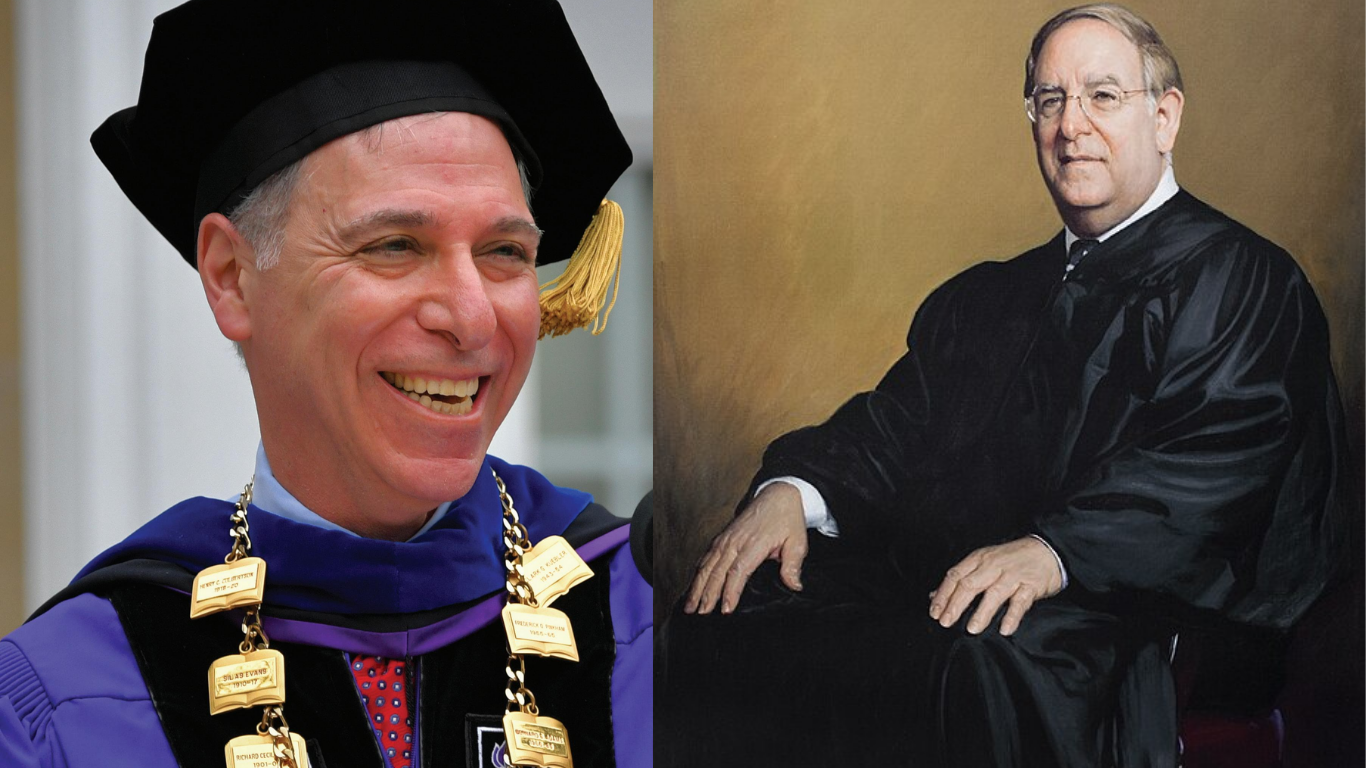
From college presidency at Ripon College to public service, Zach Messitte, Class of 1986, has created a career in institutions and now advises them from Washington, D.C. With over 20 years of experience in academia and government, he has worked across higher education leadership and nonprofit consulting. Trained as a political scientist, Messitte’s career has also included work in journalism, the U.S. Senate, and the United Nations, reflecting a sustained engagement with public life and institutional leadership.
But Messitte’s connection to BCC goes back another generation. His father, Peter Messitte, class of 1959, graduated from the school at a time when it still carried the feel of a mid-century suburban campus, shaped in part by its 1950s Georgian Revival campus-style layout – the bold red bricks a hallmark of daily life. Here, Zach Messitte recalls his father describing BCC as the place where he “had a really wonderful circle of friends,” and a place where he formed connections and experiences he would carry “all his life.” A student leader during his time at the school, Peter later went on to serve as a United States District Judge, a trajectory that reflects the same commitment to public service that defined his early years.
This commitment to public service continued to take different forms after graduation. After law school, Peter Messitte joined the Peace Corps and served in Brazil, where he taught comparative law and engaged directly with questions of education and governance in an international context. His career later moved between pirate practice and public service, first in Maryland’s state judiciary and eventually on the federal bench as a United States District Judge. Beyond the courtroom, he was also involved in efforts to strengthen judicial systems and international legal cooperation, including work connected to judicial reform as well as the promotion of the rule of law abroad. Across each stage of his career – whether abroad, in private practice, or on the bench – there remained a consistent focus on law as an act of service.
One formative influence from that period came during Peter Messitte’s graduation in 1959, when John F. Kennedy delivered the commencement address at BCC. Zach Messitte recalls that the speech left a strong impression on his father, reinforcing an understanding of public service and civic responsibility that would stay with him in the years that followed. Still early in his political career at the time, Kennedy’s message about engagement in public life became, in Peter Messitte’s memory, a point of reflection on what it meant to contribute to society beyond one’s immediate profession. That idea, Zach suggests, remained part of the broader framework through which his father approached a lifetime of work in law and public service.
Zach Messitte’s own years at BCC reflected a similar environment of engagement. He served as vice president of his senior class and was deeply involved in the Tattler itself, where he began as a staff writer before becoming news editor. He also contributed an opinion column, which became an avenue of experimentation with his voice and perspective. Much of this experience, he recalls, was shaped by the world immediately around the school, a community where civic life felt close at hand, and where, as he put it, “so many people’s parents and brothers and sisters were involved in government in some form or another.”
Alongside this sense of civic proximity was the everyday life unfolding in the town of Bethesda. He remembers lunch runs into Bethesda – quick trips to McDonald’s or Gary’s Sub Shop, afternoons which blurred into conversations with friends, and the informal routines which defined the space between classes and activities.
This sense of connection, he suggests, is something that continues to resonate well beyond high school. While individual experiences at BCC varied from classrooms to journalism to extracurricular life, what remained consistent was an underlying emphasis on engagement with others and with the broader community.
“Ask not what your country can do for you – ask what you can do for your country.”
John F. Kennedy
The address delivered by John F. Kennedy at Peter Messitte’s graduation became part of a broader ethos of public service that defined his life and, in turn, shaped the values passed down within his family. For Zach Messitte, that legacy is an everlasting thread of responsibility, linking opportunity across generations to come.
This ethic carried forward not only in Peter Messitte’s professional career but in how he chose to define his legacy. Rather than flowers, Zach recalls, his father expressed a wish that donations be directed to BCC students for scholarships to study law or international relations in college – so that future students might benefit from the same place that shaped him. “You’ve had these great experiences at BCC,” he said, “the school has been good to you. Make sure you pay it forward at some point.”
What begins at BCC lingers long after graduation has ended, when the classrooms fall quiet and the year slips into memory. It resurfaces, time after time. To the old institutions, shared histories, and quiet understanding that what was received was never meant to end with the self. It moves forward anyway, with each generation that finds its own way to give back.