There is an old joke. A Soviet and an American are seated next to each other on a plane. The American says, “I have to hand it to you, your propaganda is very impressive.” The Soviet smiles and thanks him.
“It’s nothing compared to yours.” Confused, the American tells him, “But we don’t have propaganda.”
“Exactly.”
Propaganda has long been a feature of shaping public opinion, a hidden staple in both peacetime and warfare. Yet, with the totality of social media and the persuasiveness of artificial intelligence, campaigns have evolved to become increasingly effective. With the current U.S.-Iran conflict, especially, both sides have utilized digital propaganda to weaponize public opinion.
After all, who needs machine guns when you have TikTok?
Generation Z has launched headfirst into a new era of distrust in public media. “News nowadays is so polarized, so I prefer to hear about events on TikTok,” mentioned Junior Daniella Lloreda. The younger generations are being pushed towards alternative online sources and social media for information. However, with the shift towards social media as a news source, misinformation and false claims are at an all-time high. First, social media is backed by algorithms. With consumer-driven sites like Instagram and TikTok pushing content likely to go viral, important information is entirely left out of the narrative.
What the media chooses not to report can be as impactful as what it does report. Omitting certain facts, events, or perspectives can skew public understanding of the conflict and lead to a one-sided view. Additionally, algorithm-pushed ‘viral’ content isn’t fact-checked. As you’re scrolling through thousands of videos on a tiny screen, your brain pockets endless information without a second thought. Think of a constant stream of April Fool’s pranks– without the “just kidding.” Content creators can push whatever narrative, publish information to their own desire, and even withhold entire stories. Just in the last month, studies found that 77% of accounts posting false information about Iranian drone launches were “verified” paid premium accounts with no true backing. (BBC)
Particularly with the U.S.-Iran conflict, national governments have been utilizing social media to justify war and rally public support. The United States, for one, has been appealing to Gen Z ‘edit trends’ and controlling platforms such as X to justify intervention in the Middle East. When you hear the slowed-down Macarena song to the visual of USA striped fighter jets, the first thought isn’t going to be the hundreds of casualties that will follow.
According to American University professor Elise Labott, “US media is often crisis-oriented and covers the war as a ‘play by play,’ as opposed to presenting a broader picture of the impact of the conflict.” Americans want to consume news like a story or a video game: a coping mechanism for the harsh reality of war. This is far different from most people’s perceptions of propaganda as something as simple as an Uncle Sam poster.
Combat has also become entirely desensitized. Society was not meant to see gruesome battles and exploding weaponry at the tips of their fingertips; yet now war is the new normal. “It’s a little weird seeing TikTok dances and videos of bombs back to back,” explained B-CC sophomore Julia Reitz. As people encounter the horrors of warfare in everyday life, they are more likely to support bloodshed as a “sensible option” for future resolution. In a new sense, propaganda has been materialized by humanity’s addiction to digital content.
The United States isn’t the only country weaponizing social media. In fact, the Iranian government has been found to manipulate AI and post false information to the public. An unverified claim that the Iranian military destroyed an American radar installation in Qatar was recently shared in an online article by the Tehran Times and on X. The post was then accompanied by an AI- generated image. If newspapers can entirely falsify reports, then what can be trusted as the truth?
Further, a social media account linked to the Iranian military claimed that 560 Americans had been killed or wounded so far in the fighting (as of March 4), far higher than the Pentagon’s report of six. The Iranian people are led to believe they are winning a battle in which no side is truly victorious. Just as Nazi Germany utilized propaganda during World War II to portray their army as invincible, Iran is creating a false ideal of strength to boost public morale.
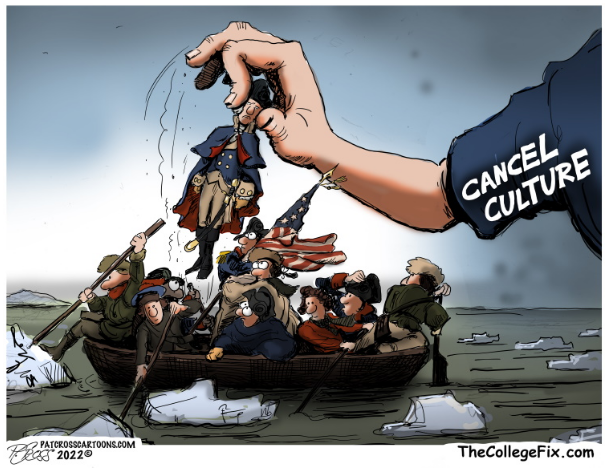
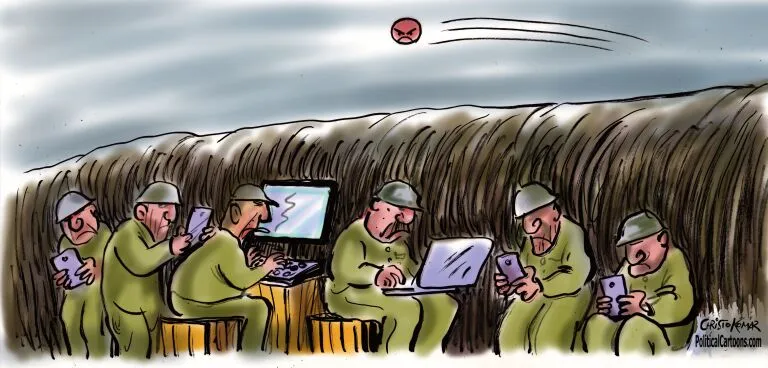
Propaganda manifests as everything from AI-generated reports to posters on the wall, X posts, and even cartoons. We may not be living in North Korea, but even so, bias is entirely institutionalized in our society. Next time you pull your phone out of your pocket, just think twice about who’s pushing the narrative.