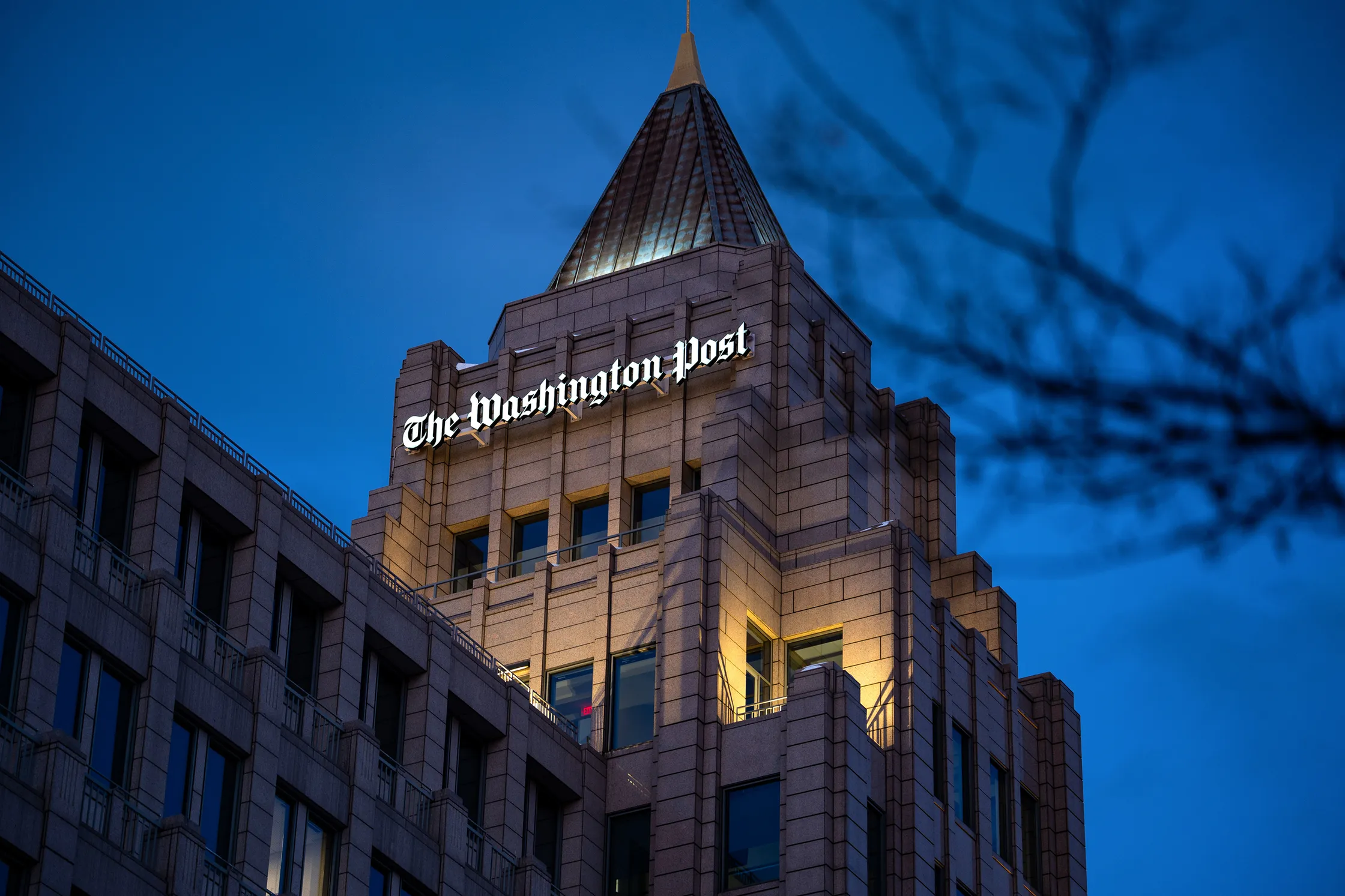
As of 2026, many families have one less newspaper being tossed onto their porch each day: The Washington Post. This absence isn’t just the result of a fading print culture, but of readers actively choosing to unsubscribe from The Washington Post — also known as “The Post,” for short — as new leadership and internal changes reshape the paper entirely. The growing cancellations signal something deeper than a shift in format; they reflect a loss of confidence in an institution that once defined journalism. The Post is losing the trust and journalistic credibility that once made it indispensable to families across Maryland and D.C. To win readers back, it must return to balanced and community-centered journalism.
Earlier this year, under Jeff Bezos’s orders, The Washington Post cut around 300 employees, eliminating a large portion of its newsroom staff. The layoffs affected multiple sections and significantly reduced the paper’s reporting capacity, marking one of the most substantial staff reductions in its recent history. Additionally, the elimination of its sports and books sections and significant reductions to metro and international coverage have further narrowed the scope of the paper’s reporting. Junior Jonah Mishalove said, “I was really surprised that they cut so many sections that are usually fundamental to newspapers.”
By removing crucial aspects of journalism, the publication becomes less diverse not only in subject matter but also in perspectives. Sports coverage creates a community and shared identity, metro reporting covers local institutions, international desks connect readers to a larger world, and the books section encourages literary culture and intellectual debate. Junior Isaac Biel, whose family recently ended their subscription with The Post, added, “My family has been avid Washington Post readers for years, and I think we finally had enough of the way Bezos has been running the paper, like cutting some of our favorite sections.” Without these spaces, the paper feels increasingly limited, offering a less well-rounded reflection of a society that it once covered in full.
The deeper issue behind these cuts is the growing sense that financial efficiency has taken priority over public service. Under new leadership, decisions seem driven less by journalistic purpose and more by budgets, with sections being cut not because they lack importance but because they aren’t immediately profitable. Coverage such as metro reporting, books, and certain sports stories requires significant time, staff, and financial resources to produce well, but it does not usually bring in as much attention as national politics or viral stories. Matt Murray, the Executive Editor of the Post, told Fox News, “We’re a business,” in response to criticism regarding Jeff Bezos’s major changes. Biel said, “I think this can really be seen in their layoffs and the cutting of long-time sections. My dad has been reading the sports section since he was five years old, and some of my fondest memories are in that section. I think it just shows they are prioritizing a number over people.” These recent changes suggest that The Post has navigated away from its former values and has shifted focused onto new financial ambitions. With this, journalism loses its purpose — internal goals begin to outweigh core values.
Public confidence in a newspaper isn’t just about how many sections it has; it’s also about whether readers feel that they are getting a true and balanced view of the world. Jeff Bezos recently announced that the Opinion section would focus on defending “personal liberties and free markets.” This move led to the resignation of the Opinion Editor and caused backlash for reducing the diversity of opinion. Mishalove remarked, “Newspapers are supposed to give a wide range of viewpoints, especially in the Opinion section. If they aren’t doing that, people are gonna lose trust and interest in the paper.” When coverage becomes smaller and fewer perspectives are told, readers are left less informed than they once were.
If The Washington Post hopes to regain public trust and rebuild its reputation, it must recommit to the values that once defined it. That means restoring the sections and coverage that represent the full range of its community. Biel said, “I think it would take a lot for them to bring their approval ratings back up, but they could increase community support by bringing back all these popular sections, rehiring workers they fired, and honestly, Bezos needs to sell the paper.” The paper should focus on transparency in its leadership decisions and actively engage with readers to understand why so many chose to unsubscribe. By encouraging more perspectives and prioritizing diversity, The Washington Post can begin to rebuild the credibility and connection that once made it essential to families across Maryland and Washington, D.C.