Cast your ballot, but don’t drink the Kool-Aid. Now more than ever, politicians effectively garner cult followings. But is this what we want our democracy to be? Fervently rallying behind politicians is an ineffective and unwise misuse of civil liberties. Politicians are public servants, not idols, and must be regarded as such.
Social Studies teacher Mrs. Pasquale identifies that politicians of different levels are treated and recognized differently based on constituency. “I think that local politicians are not given enough credit because they are working very diligently to try to, like, within their small communities, to make change happen, whatever change they personally, ideologically believe in,” said Pasquale. “I also think that state politicians sometimes don’t get a lot of credit either, because, again, they’re far overshadowed by the federal politicians.”
Pasquale added, “I find that a lot of people are seeing [federal politicians] as, like, they are the representatives of the party, the representatives of the ideology, but they tend to focus on, like, certain characteristics rather than others.”
Conversely, Senior Addison Huntley described the true role of politicians: “They’re not a celebrity, like, their job is to work for the people.”
Psychology is a crucial aspect of cult followings – political or otherwise – that must be considered. Cults are symptoms of primitive instincts to band together, behave cohesively, and fear outsiders. Humans want to have something to believe in unconditionally, something that gives a feeling of comfort and hope. For many, politicians are accessible figures that provide this assurance. The feeling of security one figure may provide can lead many to definitively support politicians regardless of policy or action. President Trump was quoted as saying, “I could stand in the middle of 5th Avenue and shoot somebody, and I wouldn’t lose voters,” a barely hyperbolic statement we’ve seen evidenced by his supporters’ constant backing.
If people need to seek out the comfort they feel by dedicating themselves to a political following, they can, and must, find this comfort in other ways. Civil society – such as religious groups, charities, or social clubs – lends itself to providing this unity amongst people, and often is much more moderate and genuinely supportive of its members.
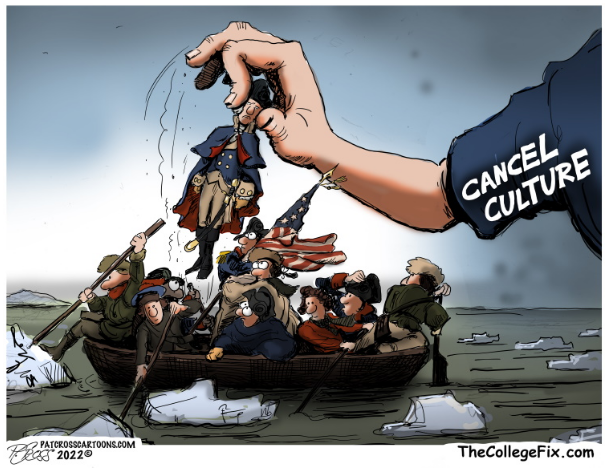
Cult-like followings have persisted as a phenomenon throughout history, sometimes having massive – and often detrimental – effects. What’s known as “charismatic legitimacy” happens when a figure gains support and power due to the people’s admiration or interest in said figure’s perceived personality or traits. JFK was praised for his handsome looks, while FDR and Reagan were personable and charming. In those cases, consequences were minimal, but that is not true for all idolized politicians. Charismatic legitimacy can sometimes supersede the public’s consideration of democratically or legally obtained authority. Figures like Mao Zedong and Adolf Hitler were supported largely due to their perceived charisma or personal traits, rather than moral or legal obligation. The danger of unconditional political support persists today. The January 6th insurrection clearly demonstrated how a hive-mind, cult-like following can directly cause violence. Trump supporters followed directions from their false idol without question, leading to physical harm and legal repercussions.
Obviously, this charisma-based support phenomenon is not how a democracy should work. Politicians are not idols to be unconditionally supported. Senior Zach Ehrenberg urges voters towards “a bigger focus on policy over the personality of an individual.” The Rule of Law itself requires everyone – including politicians – to be held accountable and to equal standards. The cult-like political climate of the U.S. today goes against the constitutional Rule of Law.
Whether it’s Zohran Mamdani or Donald Trump, politicians should not be put on a pedestal by supporters. Voters must focus on policy and action, not personality or charisma.