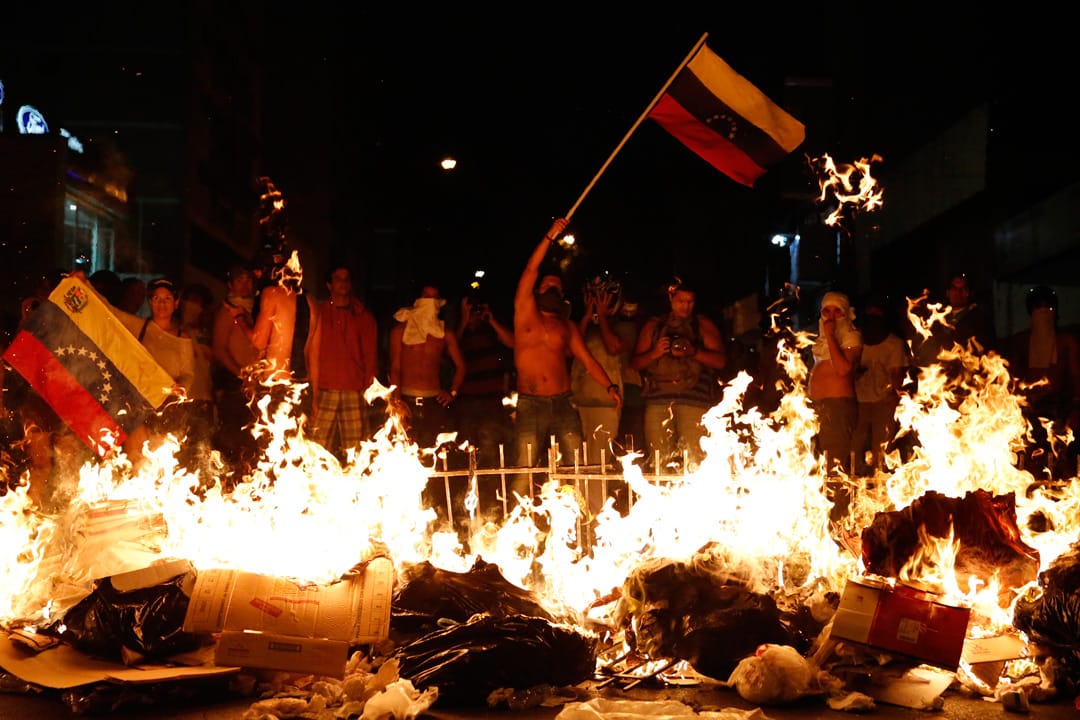
Saturday, January 3, 2026, Venezuelan President Nicolas Maduro and his wife Cilia Flores were captured by American military personnel in an operation known as Operation Absolute Resolve. According to U.S. officials, the mission followed months of covert preparation. The operation began when a CIA team moved about Caracas undetected for months as they gathered information. In the early morning of January 3, U.S. forces struck several targets in and around Caracas, Venezuela’s capital. Shortly after, the Army Delta Force commandos raided President Maduro’s compound after preparing for days to execute the mission, waiting for good weather conditions and a time when the risk of civilian casualties would be minimized. The operation was carried out swiftly, and there was no loss of American life; however, 32 Cuban fighters were killed, as well as 23 Venezuelan soldiers and two civilians. Once Maduro and Flores were taken into U.S. custody, they were flown to New York City, where they appeared in federal court to face charges of narcoterrorism and drug trafficking.
In response to international criticism, President Trump has justified Operation Absolute Resolve as a strike against drug trafficking; however, Venezuela does not play a large role in the international drug trade. Instead, Venezuela’s vast oil reserves play a central role in this crisis. AP Economics and Human Geography teacher at BCC, Mr. Zehner, mentioned, “I have no idea how it is all going to turn out, as it is very early in the story. Yes, Venezuela has a lot of oil, but how the change in leadership will affect oil prices and the overall economy of both countries is really anybody’s guess.”
Despite expectations, President Trump decided not to throw his support behind his long-time supporter, Maria Corina Machado, the opposition leader who led a successful campaign against Mr. Maduro in 2024 and won a Nobel Peace prize in December, which she dedicated to Trump. Instead, President Trump chose to back Maduro’s Vice President Delcy Rodriguez. This decision was heavily influenced by a CIA intelligence analysis that convinced Trump that if the U.S. backed the opposition, it could further destabilize the country. Secretary of State, Marco Rubio, supported the same argument.
Similar to Mr. Zehner, Venezuelan students at Bethesda-Chevy Chase High School share feelings of uncertainty about what happened to President Maduro. Sophomore and Venezuelan student Brayian Ortiz Camacaro explains how there are multiple sides to the situation. “I have two opinions. One is that Venezuela has been helped with taking Maduro out of the country … The negative is that they’re not trying to help Venezuelan people or economics,” Ortiz Camacaro shared.
Likewise, another Venezuelan B-CC student, junior Cami Cordero, also demonstrates conflicting opinions on how the event has affected her and other Venezuelan’s thoughts. “It’s a very difficult situation right now. I think a lot of people are excited, and a lot of people are very scared,” Cordero explains. “It’s definitely separating a lot of people right now due to political reasons, but I think that I can see both sides of the story. One that people are excited about, but I can also see that a lot of people are taking this as a moment to get ready for something a lot bigger,” Cordero says.
“I feel like it’s a moment where we need to be working together,” Cordero concludes. As events continue to develop, information continues to be shared, and changes continue to occur. However, there is still a lot of uncertainty and instability surrounding Venezuela’s president and the country as a whole. Many agree that Venezuelans need to stay strong and support one another to keep both each other and the entire country united.