A staple toy in many childhoods, Barbie has been a bestselling doll for decades. Transcending the label of ‘kids’ toy,’ the Barbie brand has expanded into clothes, movies, TV shows, and many more products. Mattel’s recent release of the’Autistic Barbie’ has taken the internet by storm, dividing the community over questions of representation and who gets to define inclusivity.
Barbie, which was first produced by Mattel in 1959 and was based on a German doll, became immensely popular in the 1980s. She is known for her over 250 careers, which include astronaut, computer engineer, model, and president. The motto “You Can Be Anything” is truly projected in the marketing and the wide variety of Barbies in production.
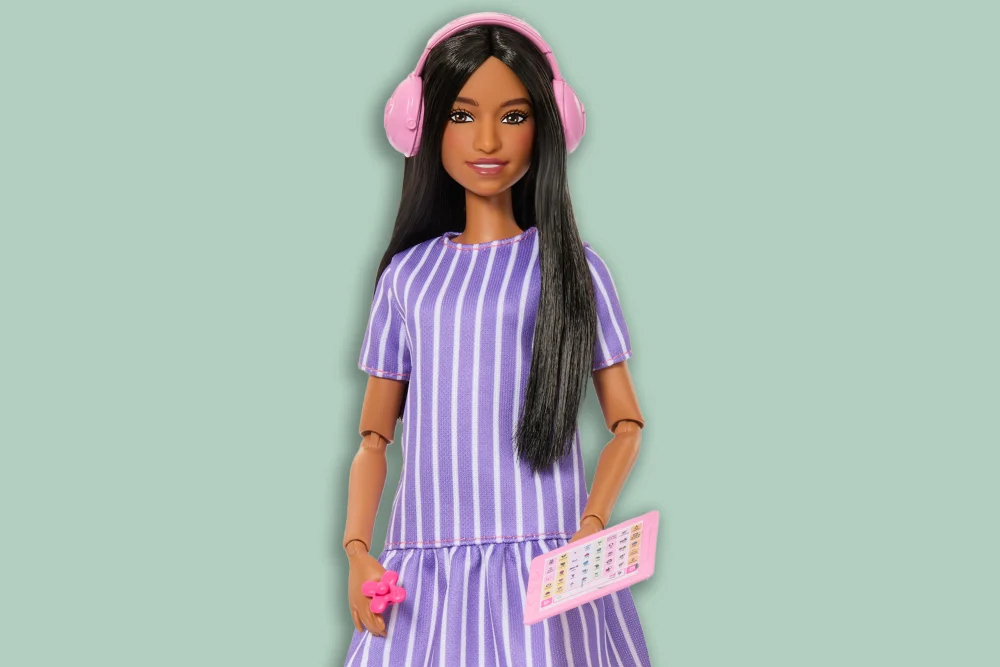
On January 11, 2026, Mattel announced the new autistic Barbie, who comes with noise-cancelling headphones, a fidget spinner, and a tablet with Augmentative and Alternative Communication apps (AACs), which those with autism can use to communicate. The doll also has special flexible joints for stimming and eyes that are looking slightly to the side to “mimic how some members of the autistic community avoid direct eye contact,” according to Mattel. The doll was created in partnership with the Autistic Self Advocacy Network (ASAN), a nonprofit disability rights organization.
Autistic Barbie is facing backlash due to autism not always being a physically visible condition; the Barbie displays many physical characteristics that not everyone with autism actually has or presents. This has caused a lot of controversy, especially on social media, where many content creators were calling out Barbie and Mattel for creating a doll that “can affirm some people and define the boundaries for others,” said Kristyn Sommer, a psychology researcher in Australia.
On the other hand, many people appreciate the new doll. “Seeing a doll that is so cool and beautiful using these devices, I think it’s gonna make a lot of kids feel like they’re able to use them too,” said Chloe Hayden, an autistic content creator with over one million followers on TikTok. Having an inclusive doll, especially from a popular company, can help people feel represented in a world where disability is often misunderstood.
Ultimately, the debate surrounding the autistic Barbie doll highlights a larger conversation about inclusion and representation in mainstream media. Some criticize the doll for oversimplifying autism, while others see it as a necessary step forward toward visibility and acceptance for those with the disorder.